
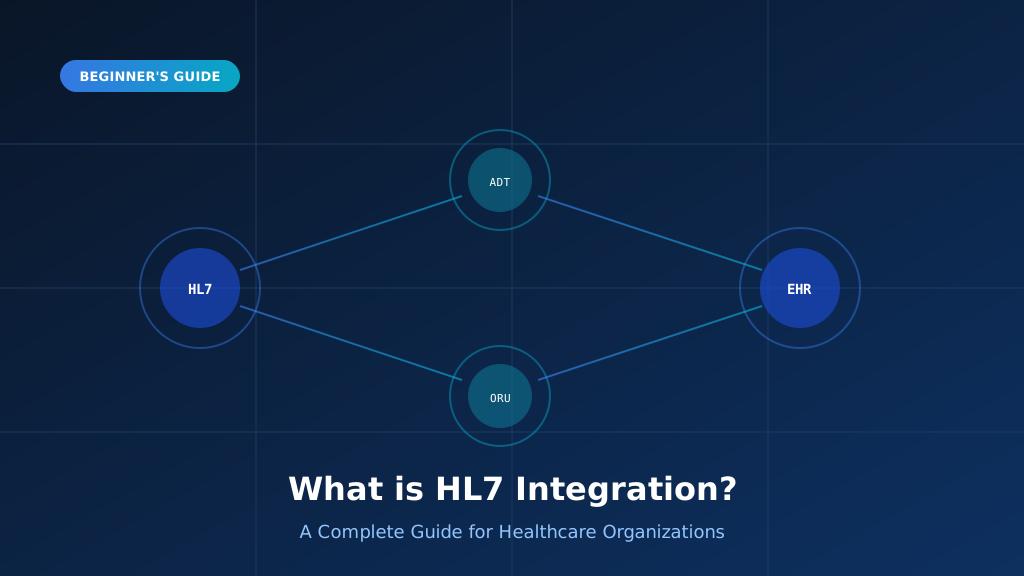
If you are new to healthcare technology, you have probably encountered the term HL7 integrationwithout a clear explanation of what it actually means. This beginner's guide breaks it down — explaining what HL7 is, why it exists, how the integration process works, and why it matters for anyone building or working with healthcare software.
What is HL7?
HL7 stands for Health Level Seven — a set of international standards for sharing health information between different healthcare systems. Think of HL7 as a common language that allows different healthcare software applications to talk to each other.
The "Level Seven" in the name refers to the seventh layer of the ISO Open Systems Interconnection (OSI) model — the application layer. This means HL7 operates at the level of the software applications themselves, defining how they structure and communicate health data.
Without HL7, a lab system and an electronic health record (EHR) would have no reliable way to exchange test results automatically. With HL7, lab results can flow from the lab system into the patient's EHR the moment they are ready — no manual entry required.
Why HL7 Exists
Modern healthcare operates with dozens of specialized software systems. There are EHRs for clinical documentation, laboratory information systems (LIS) for test management, radiology information systems (RIS) for imaging, pharmacy systems for medication management, billing systems for revenue cycle, and scheduling systems for appointments — often from different vendors.
These systems do not naturally communicate well with each other. Without a common standard, healthcare organizations would be forced into manual data entry, custom point-to-point integrations for every system pair, or simply accepting dangerous data silos.
HL7 solves this problem by defining a common language and message structure that all systems can adopt — creating the foundation for true healthcare interoperability.
What is HL7 Integration?
HL7 integration is the process of connecting healthcare systems using HL7 standards so they can share data in real time. When two systems are HL7-integrated, events in one system automatically trigger data exchanges with others — without any manual intervention.
HL7 integration typically involves:
- Setting up message formats — Configuring the structure and content of HL7 messages exchanged between systems
- Mapping data fields — Translating data from one system's format to another (since no two vendors implement HL7 identically)
- Using middleware — An integration engine (such as Mirth Connect or Rhapsody) that receives, transforms, and routes messages between systems
- Monitoring message flow — Ongoing oversight to detect failures, retransmissions, and data quality issues
What is the HL7 Protocol?
The HL7 protocol defines three things: message structure, message types, and transport methods.
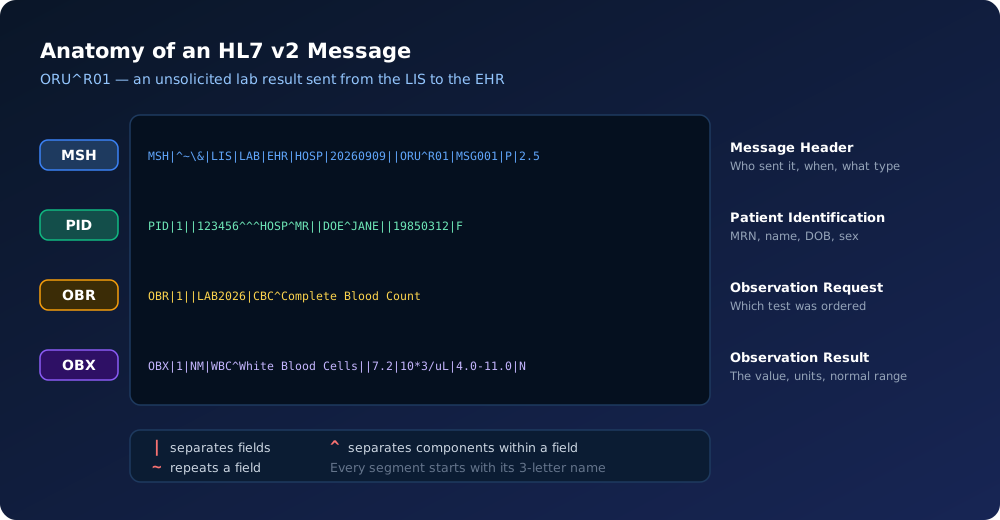
Message structure describes how data is organized within an HL7 message. Messages are divided into segments (like MSH for message header, PID for patient identification, OBR for observation requests), and segments are divided into fields separated by pipe characters (|).
Message types define what event triggered the message. Common types include ADT (Admit, Discharge, Transfer) for patient registration events and ORU (Observation Result Unsolicited) for lab results.
Transport methods define how messages are sent between systems. HL7 v2 messages are typically transmitted over MLLP (Minimal Lower Layer Protocol) using TCP/IP connections, though HTTPS is increasingly used for modern integrations.
Common HL7 Standards
HL7 has evolved through several generations of standards, each taking a different technical approach:
- HL7 v2.x — The most widely adopted HL7 standard, in use since the late 1980s. Uses a pipe-delimited text format and MLLP transport. Despite its age, HL7 v2 remains the backbone of real-time clinical messaging in hospitals worldwide.
- HL7 v3 — A more complex XML-based standard developed in the 2000s. Technically rigorous but difficult to implement, HL7 v3 never achieved widespread adoption outside of specific domains like CDA (Clinical Document Architecture).
- HL7 FHIR (Fast Healthcare Interoperability Resources) — The modern HL7 standard, built on REST APIs, JSON/XML resources, and standard web protocols. FHIR is designed for cloud-based applications, patient portals, mobile apps, and the regulatory requirements of the ONC and CMS Interoperability Rules.
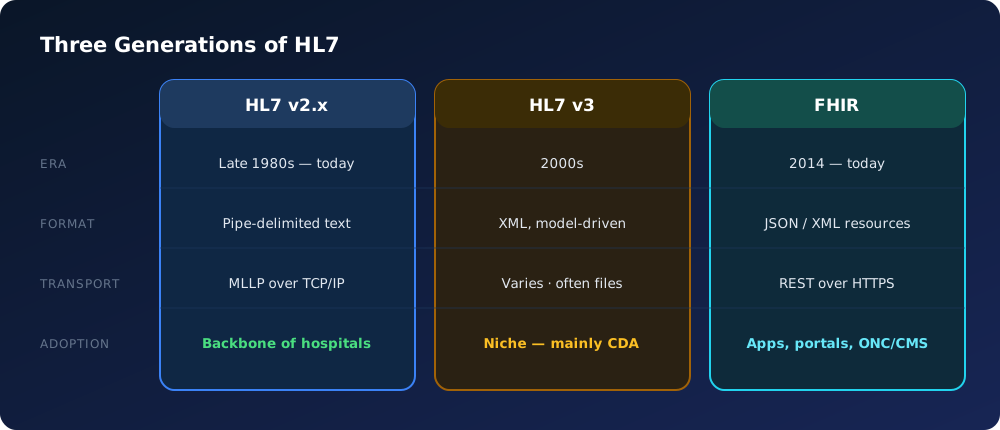
In most healthcare organizations today, HL7 v2 and FHIR coexist — v2 handling real-time clinical messaging between internal systems, and FHIR powering API-based access for modern applications.
Real-World Example of HL7 Integration
Consider what happens when a patient is admitted to a hospital:
- The admissions clerk registers the patient in the EHR, triggering an ADT A01 (Admit) message
- The HL7 integration engine receives this message and routes it to the lab system, pharmacy system, radiology system, and billing system
- Each downstream system now knows the patient exists and is admitted — without any manual entry
- When the physician orders blood tests, an ORM (Order) message is sent from the EHR to the lab system
- When results are ready, the lab sends an ORU (Result) message back to the EHR, where it appears in the patient's chart automatically
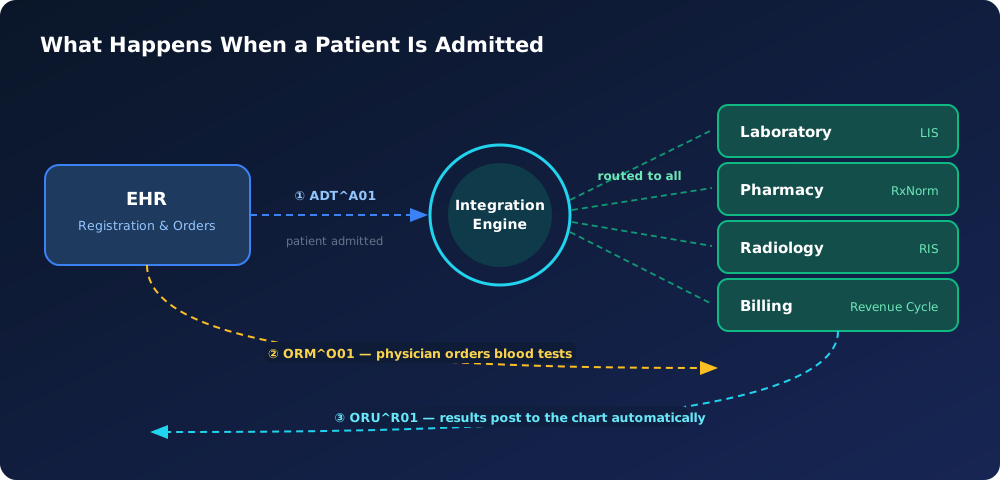
Without HL7 integration, each of those steps would require a staff member to manually enter data into multiple systems — creating delays, errors, and significant HIPAA risk.
Why HL7 Integration Matters
Proper HL7 integration delivers measurable benefits across every dimension of healthcare operations:
- Faster care delivery — Clinicians get lab results, imaging reports, and patient history the moment they are available, not hours later
- Reduced manual errors — Automated data exchange eliminates transcription mistakes that can have life-threatening consequences
- Better-informed clinical decisions — A complete, real-time view of the patient across all systems enables more accurate diagnoses and treatment decisions
- Regulatory compliance — Meeting ONC, CMS, and state HIE requirements for data sharing, patient access, and interoperability reporting
- Operational efficiency — Reduced administrative burden on clinical staff, faster billing cycles, and lower costs across the revenue cycle
Final Thoughts
HL7 integration is the glue that holds modern healthcare IT together. Without it, the dozens of specialized systems in a healthcare organization operate as isolated silos — slowing care, creating errors, and frustrating both clinicians and patients.
Whether you are building a new healthcare application, evaluating an EHR integration project, or simply trying to understand the landscape of healthcare interoperability, understanding HL7 is foundational. The standards may be decades old in some cases, but the problems they solve — connecting fragmented systems to deliver seamless, safe, data-driven care — are as relevant as ever.
Ready to go deeper? Explore our complete guide to HL7 integration for healthcare organizations, or speak with our HL7 integration team about your specific integration requirements.